DR. RADKA REIFOVÁ
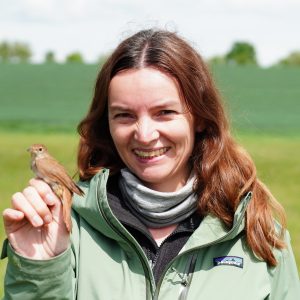 Radka Reifová is Assistant Professor and leader of the Evolutionary genetics group at Charles University (Czech Republic). Radka’s research focuses on the evolution of avian genomes and the mechanisms of species origin in birds. Most of her work centers on passerine birds, including two hybridizing species of Luscinia nightingales. Together with her team, she studies mechanisms of speciation and the evolution of reproductive isolation at genomic, ecological, and behavioral levels. She is particularly interested in the mechanisms underlying intrinsic hybrid incompatibilities, focusing especially on sex chromosomes and their role in hybrid sterility. More recently, she has been investigating the genetic composition, evolution, and biological significance of the germline-restricted chromosome of passerine birds, with particular interest in its role in germline development, adaptive evolution, and speciation.

PROF. BEN HATCHWELL
Ben Hatchwell is Professor of Evolutionary Ecology at the University of Sheffield. He studied Zoology at Oxford (1984), received his PhD from Sheffield (1988) and after post-docs in Cambridge and Oxford, he returned to Sheffield as a lecturer in 1993. Ben’s principal area of research is social evolution, using observational and experimental field studies of individually marked birds to investigate the causes and consequences of sociality, the rules governing social decisions, and the role of kin selection. A key system in this work has been a long-term study of long-tailed tits that he started in 1994 and is still running. Ben has been awarded the ASAB Medal by the Association for the Study of Animal Behaviour (2023) and the Elliott Coues Award by the American Ornithologists’ Society (2025) for his scientific contributions.
PROF. SANDRA BOUWHUIS
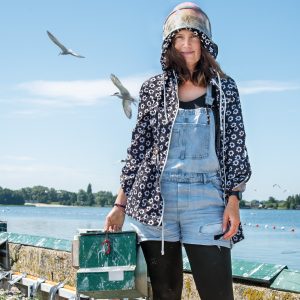 Sandra Bouwhuis is an evolutionary ecologist with an interest in the causes and consequences of within-individual change in life-history traits and between-individual variation in life-history strategies. Since 2016, she is the scientific director of the Institute of Avian Research in Wilhelmshaven, Germany, where she maintains a long-term study population of common terns. Main current foci are their migratory behaviour, pollution levels and responses to climate change and avian influenza. Sandra also supplements the work of a conservation project protecting the last Central-European population of gull-billed terns with science. Outreach is close to her heart as well, such that she established an exhibition on the common terns at the field site in Wilhelmshaven, developed a science suitcase to take to schools, and organize events such as Science Pub, Science Slam and the Long Night of Science as head of the executive board of the ‘Nordwestdeutsche Universitätsgesellschaft’.
PROF. BART KEMPENAERS
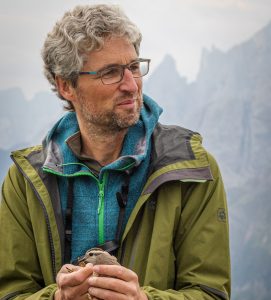 Bart Kempenaers is a scientific director at the Max Planck Institute for Biological Intelligence in Germany, where he leads the Department of Ornithology at the Seewiesen campus. He also holds an honorary professorship in Behavioural Ecology at the Ludwig Maximilian University in Munich. Bart’s main research interests are in avian mating systems and sexual selection, and he currently focuses on how sexual selection affects activity and movement patterns of shorebirds. In collaboration with students and scientists in his group, his curiosity led him to work on diverse aspects of ornithology, including avian microbiomes, macroecology, movement ecology and migration, egg colour and content, plumage colour, song, and seasonal and daily timing of behaviour.
DR. CÉLINE ARZEL
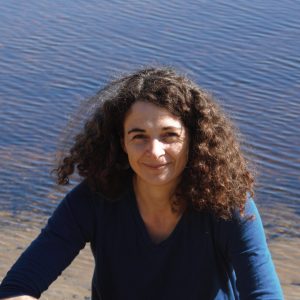 Céline Arzel is a senior researcher and group leader at the University of Turku, Finland. She investigates the ecological consequences of water browning and emerging contaminants on aquatic communities, with a special emphasis on waterbirds and other wetland-dependent species. Her work aims to improve our understanding of how environmental change influences biodiversity, ecosystem functioning, and species conservation. In addition to impact assessment, she actively promotes nature-based solutions and advocates for the conservation of underappreciated habitats such as temporary wetlands, which continue to be degraded and drained despite their critical role in supporting biodiversity and ecosystem services. She is particularly committed to bridging science, policy, and society through outreach and stakeholder engagement, ensuring that research findings inform conservation action and decision-making. Beyond academia, she serves as Director of OMPO, an NGO dedicated to the conservation and management of migratory birds and their habitats, and as Co-Editor-in-Chief of Ornis Fennica.
DR. KARINE PRINCÉ
 Dr. Karine Princé is a research scientist at the Centre for Ecology and Conservation Sciences (CESCO), French National Museum of Natural History (MNHN), Paris, working at the interface of quantitative ecology and biodiversity conservation. Her research focuses on understanding the dynamics of bird populations and communities in the context of global change, with particular emphasis on agricultural landscapes, land-use change and anthropogenic pressures. She has developed expertise in the analysis of long-term biodiversity monitoring and citizen-science data, combining large-scale ecological datasets with statistical approaches adapted to complex spatial and temporal structures. Her research has progressively expanded from understanding biodiversity dynamics to evaluating conservation policies and exploring future trajectories of agricultural socio-ecosystems. She currently investigates the effects of pesticide use on biodiversity and contributes to research connecting biodiversity, agriculture and environmental policy. Her work aims to better understand how ecological changes and human activities interact, and to provide robust evidence for biodiversity conservation and environmental decision-making.
PROF. LUCY APLIN
 Lucy Aplin holds a joint appointment at the Institute of Evolutionary Biology and Environmental Studies at the University of Zurich, and at the Research School of Biology at the Australian National University. Prior to this, she held a Max Planck Research Group Leader Fellowship in the Max Planck for Animal Behavior, was a Junior Research Fellow at St John’s College, Oxford, and studied for her PhD at the Australian National University and the University of Oxford. Lucy heads the Cognitive and Cultural Ecology Group, which aims to understand the interaction between cognition, sociality and ecology in birds. Her research has used studies in parids and parrots to ask how innovations emerge, spread and persist in populations, and how these processes facilitate adaptive behavioural responses to anthropogenic change. In other words, how do cultural traits emerge in birds, and does cognition and culture help predict which birds succeed in the Anthropocene?